PT-141 trial results and their critics
I wanted the objection stated as carefully as the original result. Neither becomes more convincing when the other is left out.
RECONNECT
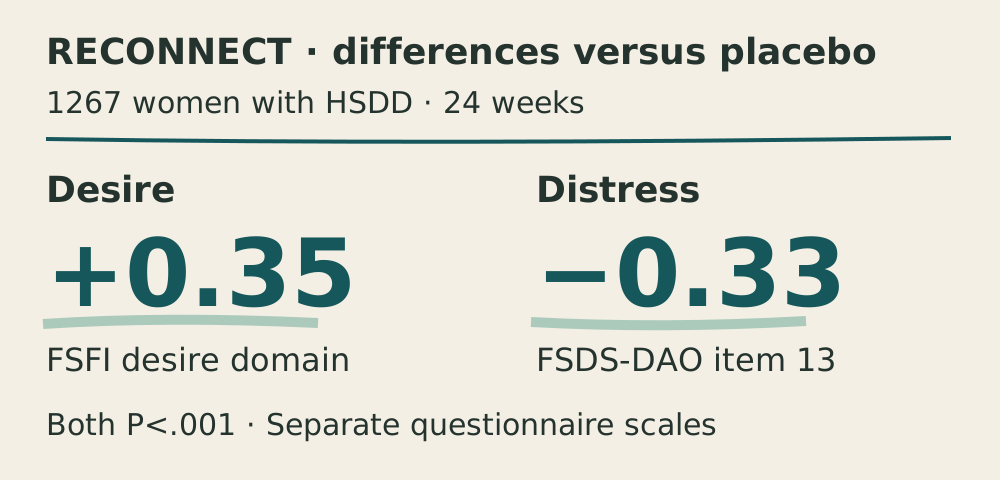
Two identical Phase 3 trials enrolled 1267 premenopausal women with HSDD. Over 24 weeks, women received bremelanotide or placebo. The integrated differences versus placebo were +0.35 on the FSFI desire domain and -0.33 on FSDS-DAO item 13; both had P<.001. These are scores from different questionnaires, so they cannot be added into a single measure of benefit.
FSFI is the Female Sexual Function Index. Its desire domain concerns sexual interest. FSDS-DAO measures sexual distress, and item 13 concerns distress about low desire. That distinction matters to me: wanting sex more and feeling less troubled by low desire are related experiences, but a result on one scale cannot stand in for the other.
The clinical-meaning objection
Spielmans’ 2021 secondary analysis argued that the desire and distress effects were small and questioned their clinical meaningfulness and the outcome measures. This was a re-examination of trial data, rather than another experiment enrolling a new group of women.
I take the criticism seriously because useful is a stronger claim than detectable. Yet small average differences also leave room for disagreement about what a person values. The trials establish an average advantage on their selected measures; the critic challenges how much practical importance to attach to it. Declaring a winner would leave me with exactly the same problem.
Questionnaires and lived experience
Asking women about desire is essential to a drug intended to change desire. The hard part is interpreting the answers. I resist the idea that a questionnaire is inherently a poor measure merely because the experience is subjective. I also resist treating any favourable score as proof of a substantial improvement.
The approval-era review sets out the pharmacology, efficacy and adverse effects together. A later evaluation of bremelanotide injection considers its place in therapy. Their attention to treatment burden gives me a more useful question: does the relief justify the trouble involved?

Extension study and brain scans
The 52-week open-label extension enrolled 684 women, reported sustained desire improvements and found no new safety signals. Everyone in that extension knew they were receiving active treatment. I read the sustained improvement with interest, while giving a study without a concurrent blinded placebo comparison a different weight from the original trials.
In a separate crossover brain-imaging study of 31 premenopausal women with HSDD, bremelanotide increased reported desire for up to 24 hours and altered processing of sexual stimuli, including amygdala–insula connectivity. That makes the central mechanism more plausible. Clinical usefulness still depends on the experience of treatment and its adverse effects.
Contemporary management recommendations discuss bremelanotide among the approved pharmacotherapies for HSDD. The side-effect record explains why an efficacy discussion needs more than the positive scores.